
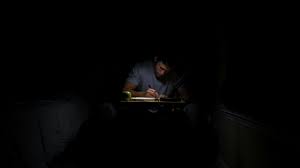
Not Everyone Is Called to Write a Book
Spend five minutes on the internet and you’ll see it everywhere. Ads promising to help you write a bestseller, courses claiming you can become an author in thirty days, and entire companies built around helping people publish their ideas and build a platform. The message shows up so often that it almost feels like a universal expectation: if you have a story, you should write a book.
There is nothing inherently wrong with that. Books matter. A well-written book can shape the way someone thinks about life, help a person navigate a difficult season, or offer clarity when the path forward feels uncertain.
Yet in the middle of all that enthusiasm, there is a quieter truth we rarely say out loud. Not everyone is called to write one.
That may sound strange in a culture that often treats authorship as a milestone everyone should pursue, but life rarely works that way. Each of us is given different assignments. Some people are meant to build businesses or organizations. Some quietly shape families and communities. Others serve faithfully in places the world will never applaud or notice.
And then there are a few who feel compelled to write.
The difference is not ambition. It is calling.
Why People Want to Write a Book
People come to the idea of writing a book for many reasons, and many of them are completely understandable. For some, a book represents recognition. The title “author” carries credibility, and people imagine the opportunities that might follow—speaking engagements, interviews, or a wider platform to share ideas.
Others hope a book will create financial opportunity. Occasionally that happens, but the truth is that most books never generate much income. The dream of a bestseller is powerful, even if it rarely unfolds the way people expect.
For some, the motivation is legacy. They want to leave something behind—something that captures their experiences, lessons, and beliefs. There is something deeply human about wanting the important parts of our lives to outlive us.
Writing can also become part of healing. When someone has walked through significant pain, putting words on paper often helps make sense of the story they have lived. It becomes a way of processing loss, understanding grace, and discovering meaning in the middle of suffering.
And sometimes people write simply because they want to help someone else. They have learned something through hardship or experience and believe that sharing it might make another person’s journey a little clearer.
All of these motivations can be sincere. But even among them, there is something deeper than motivation.
Calling.
When Writing Becomes a Calling
Wanting to write usually begins with desire. Being called to write grows out of conviction.
It is difficult to explain unless you have experienced it. Over time something inside you refuses to stay quiet. You begin to notice how certain moments in your life—both joyful and painful—have shaped who you are. Patterns start to appear, lessons rise to the surface, and you slowly begin to recognize the fingerprints of God in places you once overlooked.
Eventually a realization settles in: the story unfolding in your life may not belong to you alone.
Someone else may need to hear it. Someone who feels alone in their struggle. Someone who believes their pain is unique. Someone who needs to be reminded that God has not forgotten them.
When that realization arrives, writing stops feeling like ambition and begins to feel like responsibility.
The Story I Never Planned to Write
If I am honest, writing a book was never part of my plan. I did not wake up one morning thinking I should become an author or build some kind of platform. Life simply unfolded in ways I never could have predicted.
There has been tremendous joy in my life, but there has also been deep sorrow—sorrow that reshaped everything I thought I understood about love, faith, and survival.
Losing my wife after more than twenty years of marriage shattered the world I knew. Anyone who has experienced that kind of loss understands that it is not something you neatly move past. It changes you slowly and deeply, often in ways you cannot fully understand until years later.
And yet even in the darkest places, God continued to show up. That sentence may sound simple on the page, but it represents years of wrestling, grieving, questioning, and slowly learning how to stand again.
What I never expected was that somewhere along the road God would bring another woman into my life who understood that kind of loss from the inside. She too had lost her best friend after more than two decades of marriage and raising a family together. She knows the silence that grief leaves behind and the courage it takes to rebuild a life that once felt whole.
Many people who know the full story say parts of it sound almost unreal. They describe it as something that feels more like a movie than real life.
But God.
God knows exactly what He is doing, even when we cannot see the whole picture.

A Life Brought Back
There was also a moment when my own life nearly ended. I suffered a heart attack, coded, and was brought back to life.
Experiences like that have a way of clarifying things. When you realize your life could have ended, you begin to ask deeper questions about why you are still here. For me, that question keeps returning to a quiet conviction that has grown stronger over time.
The story must be shared.
Not because my life is extraordinary, but because God has been extraordinarily faithful inside it.
The Hard Work of Listening to God
Writing this book is not easy. It means revisiting pain instead of burying it. It means facing memories that would be far easier to leave untouched. It means wrestling with how to tell a story honestly without harming people I care about.
There are moments when the weight of it feels overwhelming. There are moments when I feel shaken.
Yet underneath that trembling there is still a foundation that has not moved. My faith reminds me that even when I feel unsteady, God is steady. Even when I cannot see the path clearly, He can.
So the process has become one of listening—slowing down long enough to ask God what should be said and what should remain quiet. I want every word to reflect His will rather than my own ambition.
Something Is Forming
Over the past several years, something has slowly been forming out of all these experiences.
It is not just a collection of memories. It is not simply a personal story. What is taking shape is a deeper reflection on mercy—how it echoes through our lives in ways we often only recognize years later.
I find myself writing about the strange places where grief and grace meet. About the way God pursues us even when we feel lost, exhausted, or uncertain about the road ahead. About the quiet ways He carries people through moments that should have destroyed them.
The pages are still being written, and the work itself is humbling. Every time I sit down to write, I am reminded how much I still need God’s guidance to tell the story well.
But I do believe this: when the time is right, that story will find the people who need it.

If You’d Like to Walk With Me
One of the things I have come to realize during this process is that writing a book is not just about producing pages. It is about walking through the story honestly while God continues shaping it.
There will likely be moments along the way when I share pieces of what I am learning—reflections about faith, grief, mercy, and the surprising ways God meets us in places we never expected.
If that kind of journey resonates with you, I invite you to walk along with me as the story continues to unfold.
A Request for Prayer
Let me say something plainly.
I need prayer.
If you are reading this, I ask you sincerely to pray for me during this process. Pray that I would have wisdom, humility, and courage. Pray that I would not write a single word that strays from what God desires.
I do not want this story to glorify me. If anything, I hope it points clearly to the mercy and patience of God.
Scripture says those who trust in Him will not be shaken. Some days I still feel shaken, but I know where my feet are planted. They are planted on the Word of God and the presence of God, and for that I am deeply thankful.
For the Sake of the Call
So I write.
Not because it is easy or impressive, but because I believe this is what God has asked me to do. I write for the sake of the call, for the glory of God, and for whatever purpose He may have hidden inside all this pain.
I still have questions. I still feel the weight of telling a story that involves people I love.
But I trust the One who has carried me this far.
God knows what must be done, and I believe He will show me the way.
So if you think about it, pray.
Because sometimes a book is more than a book. Sometimes it is simply a man trying to be faithful with the story God gave him—and trusting that, if God chooses to breathe on the words, that story may become hope for someone else who thought their own story was finished.